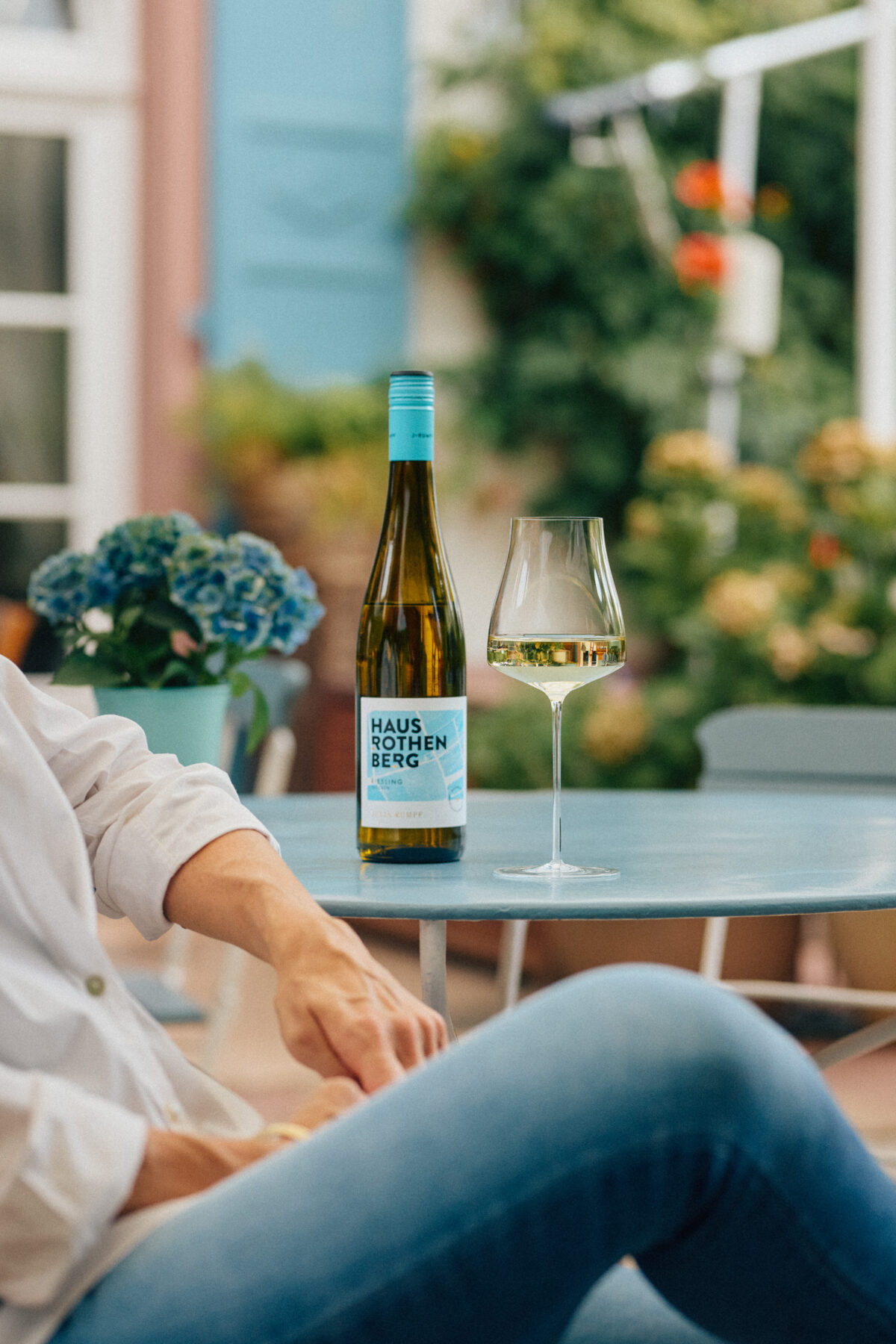
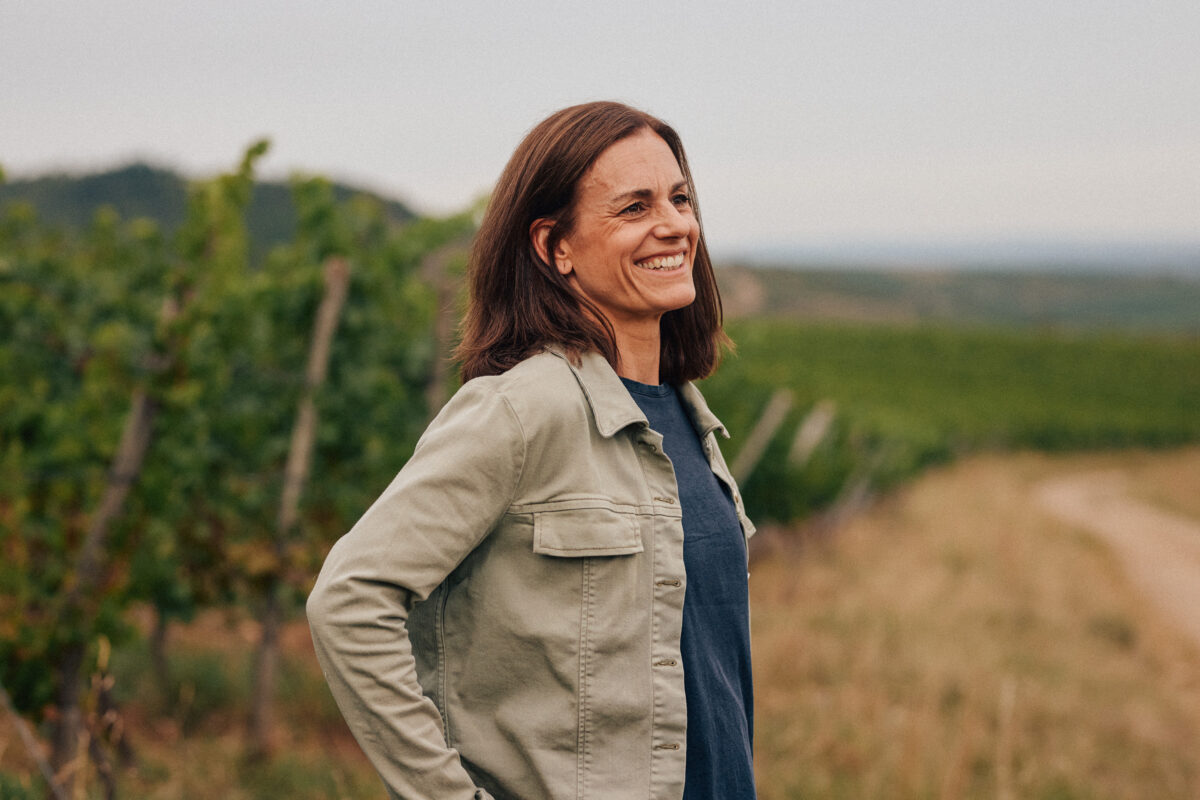
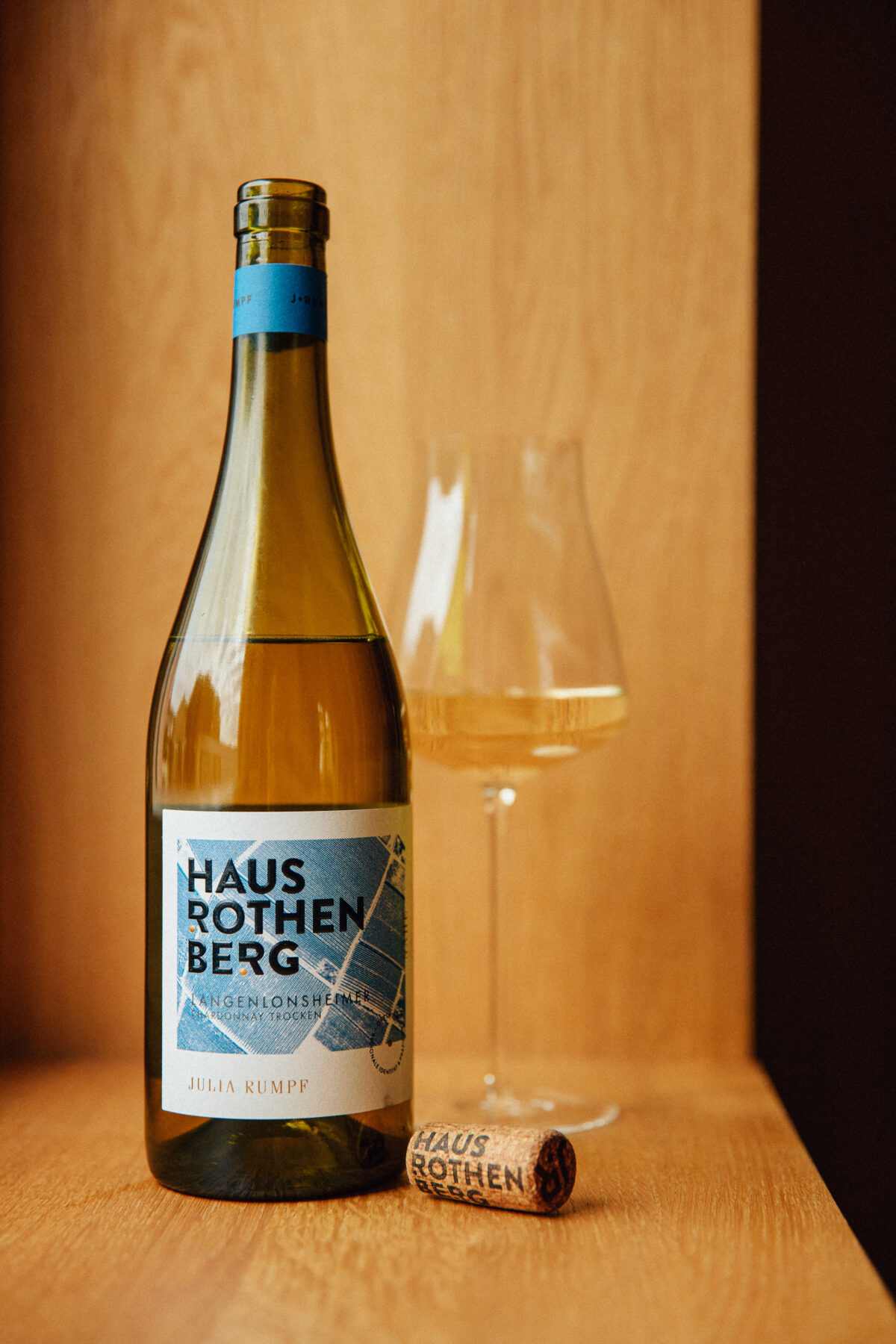
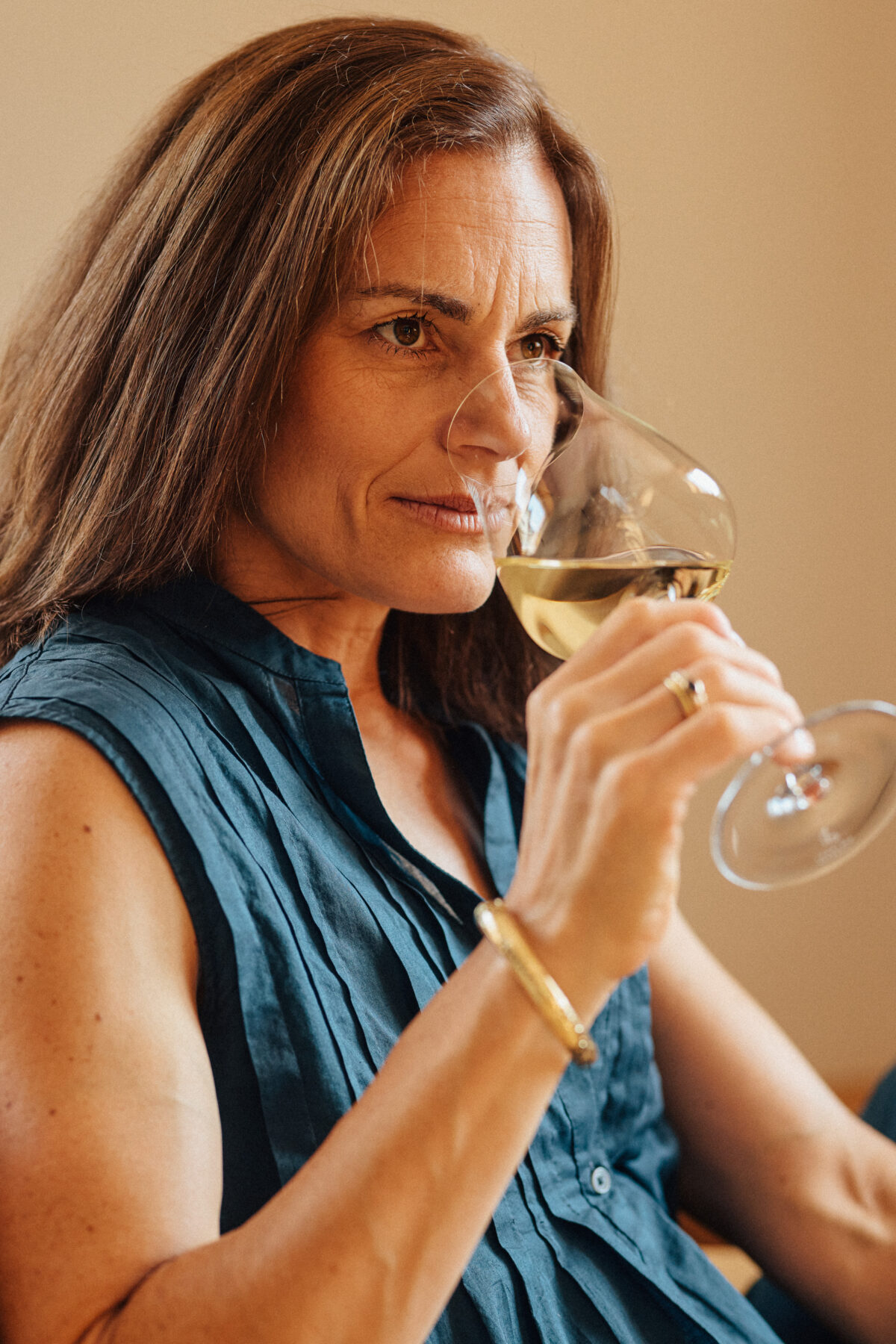
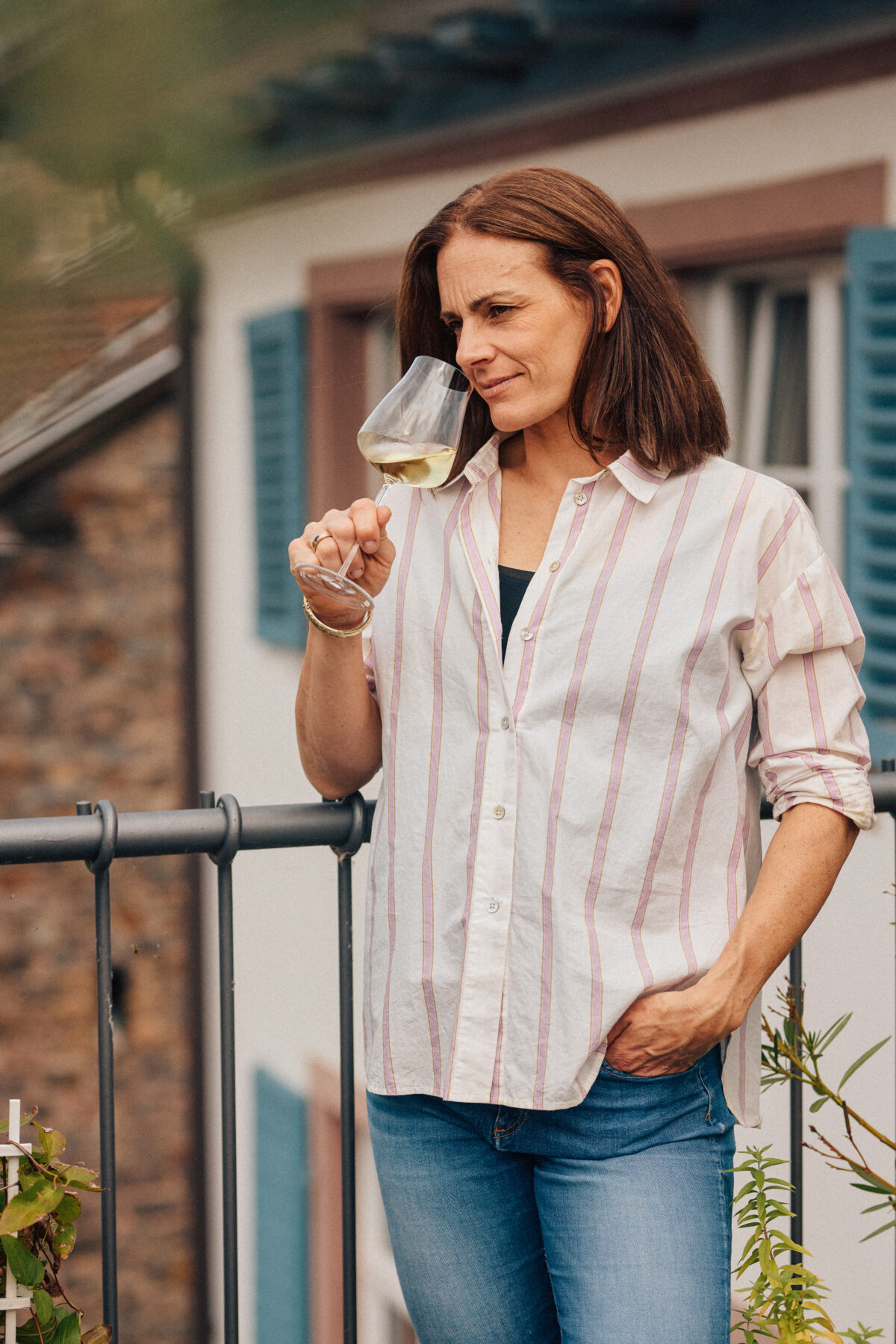
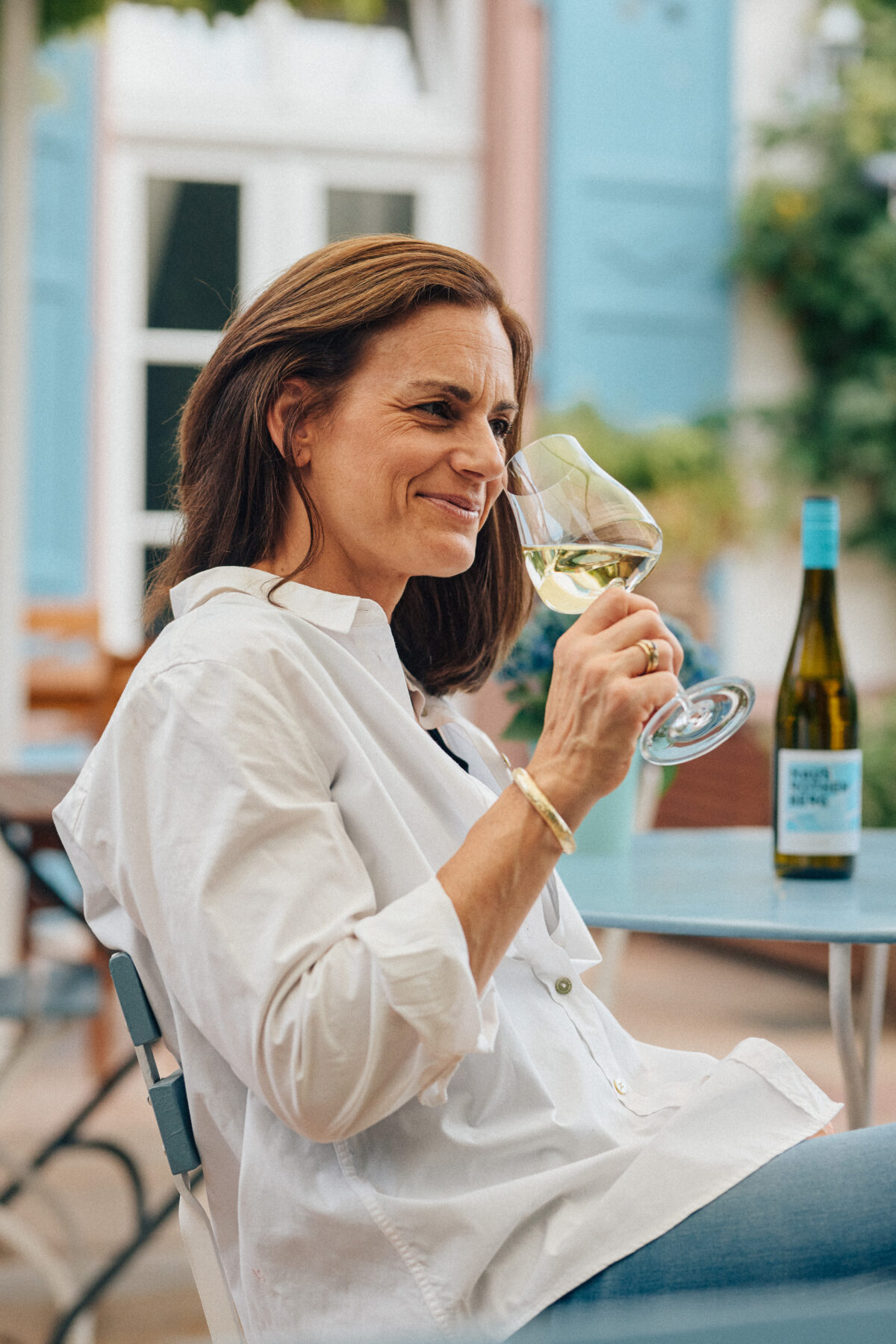
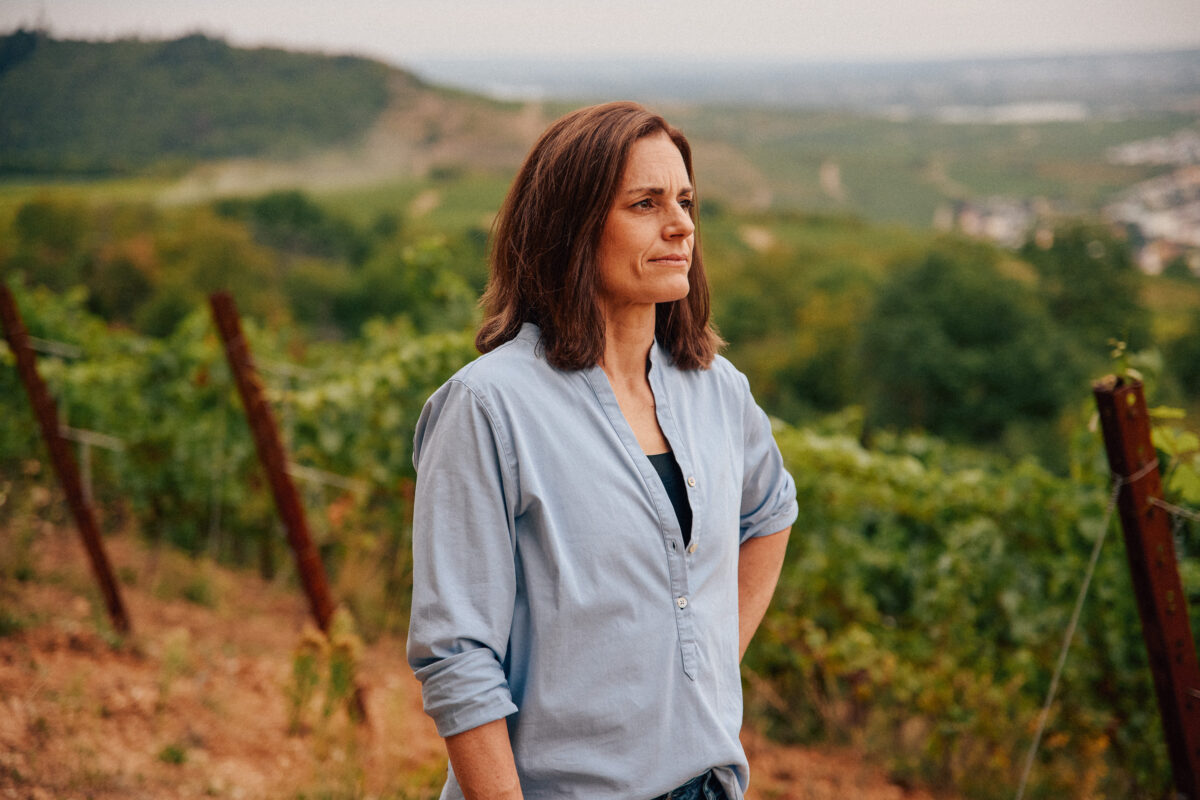
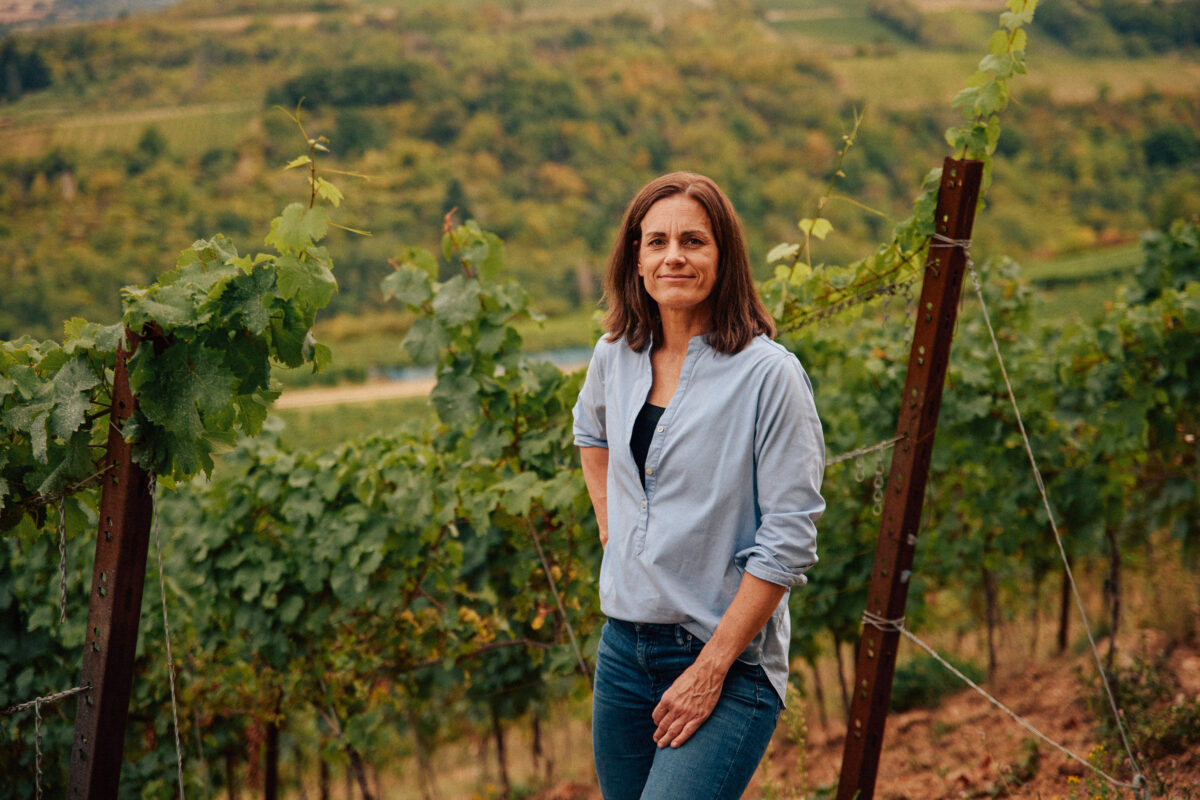
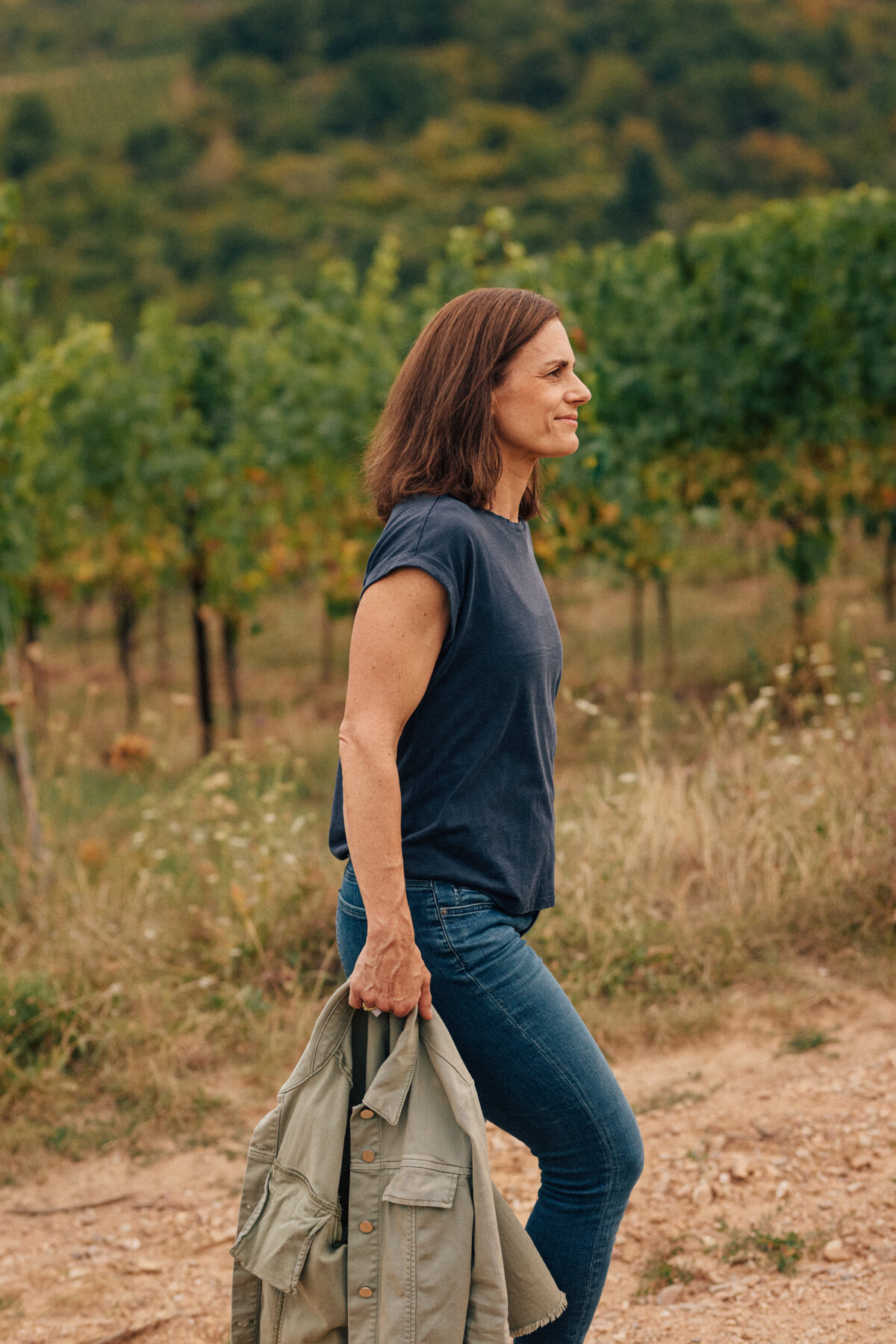
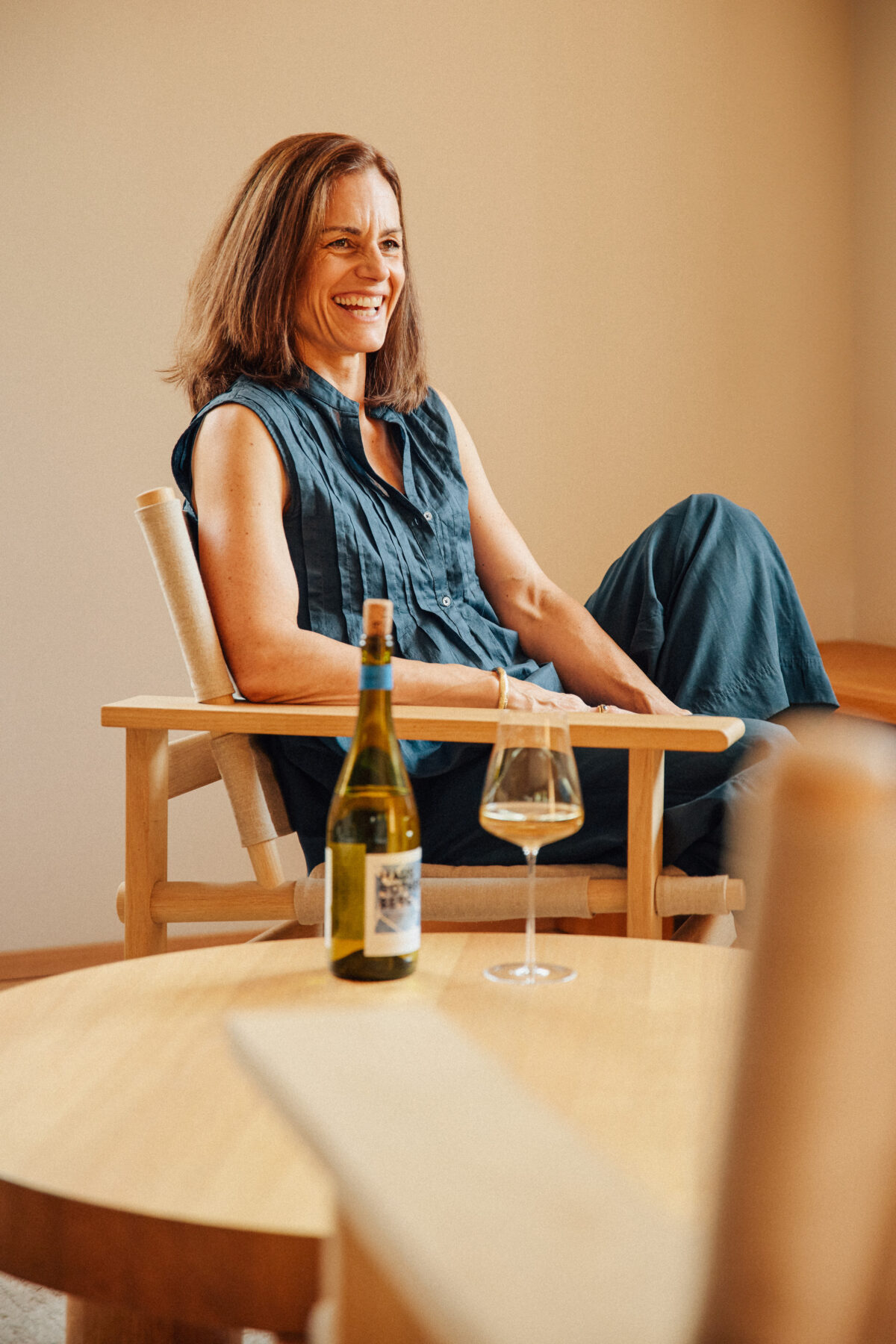
“It is not about reinventing something, but about giving what already exists the space it deserves.” — Julia Rumpf
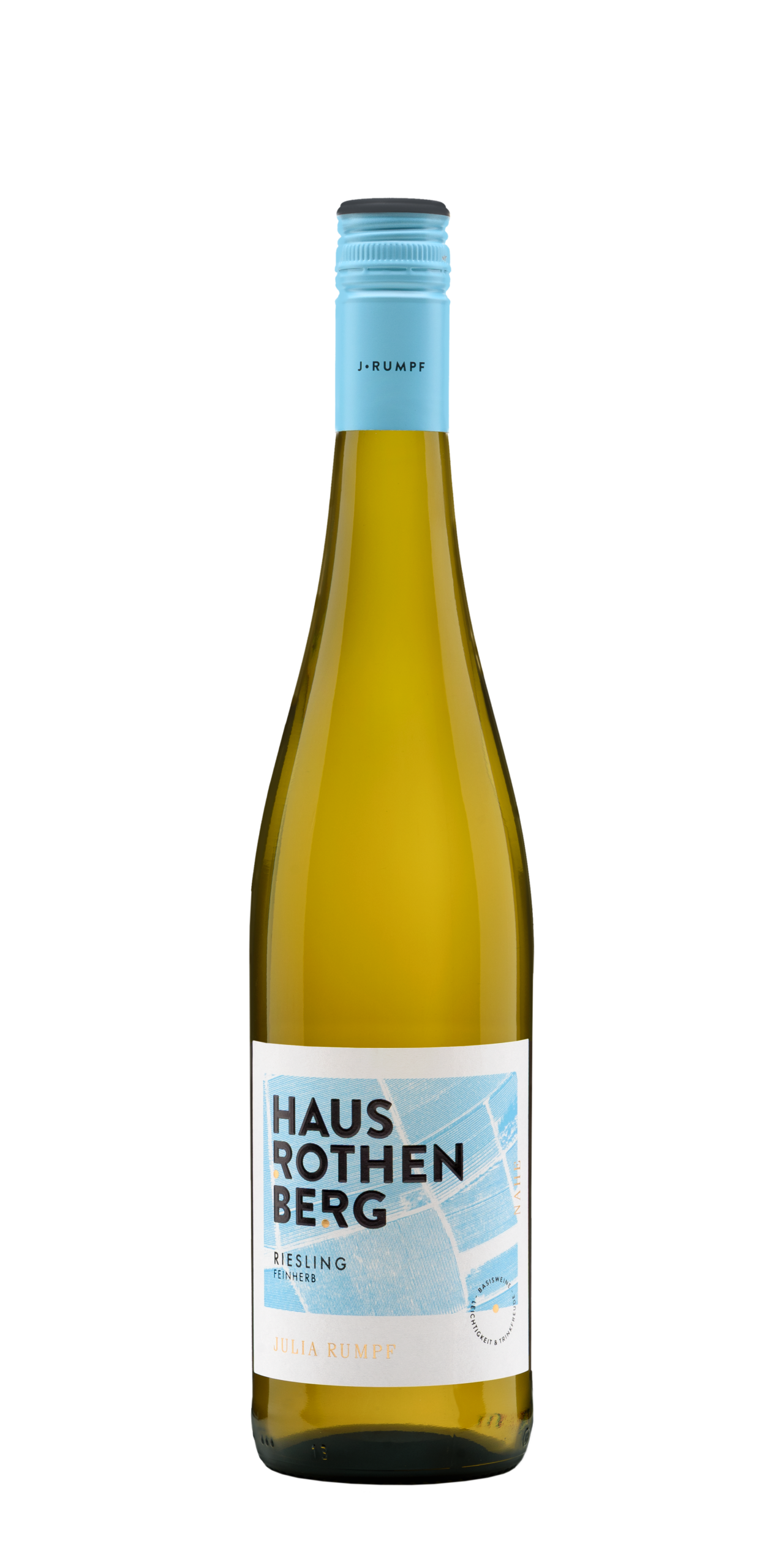
Haus Rothenberg is a new wine line built on deep historical roots. The project centers on approximately 10 hectares of vineyards in Langenlonsheim, acquired from the long-established Sitzius estate, a winery known for decades of award-winning wines and an early, unwavering commitment to quality. The vineyards, many planted in the 1980s and 1990s, are now in their prime, naturally yielding low volumes and producing wines of depth, balance, and expression.
The name Haus Rothenberg connects multiple threads. Historical records reference parts of the Sitzius operation as “Gut Rothenberg,” and the production facility sits directly within the Rothenberg vineyard in Rummelsheim. The Rothenberg itself is historically classified as a Grosse Lage, one of the region’s most exciting sites. Georg Rumpf oversees all vineyard and cellar work. However, it is Julia Rumpf who serves as managing director, shaping the line’s identity, language, and direction. Her name on the label signals what this is: a personal project.
The portfolio focuses on Riesling, Burgundy varieties (chardonnay, pinot gris, pinot blanc), and sauvignon blanc. All vineyards are farmed organically and sustainably and are currently in transition toward certification. In the cellar, the approach emphasizes clarity, precision, and restraint. The rule is generally that of minimal intervention. Fermentation takes place in stainless steel or large traditional oak casks, and the wines see several months on fine lees before bottling. The results are wines that balance structure with drinkability, showing inner tension without heaviness, shaped by their origins in shell limestone, clay, loess, and gravel soils.
History
The Sitzius estate in Langenlonsheim played a key role in establishing the village’s reputation as a serious origin for terroir-driven wines. When the opportunity arose to acquire their vineyards, Georg and Julia moved quickly. In 2024, they began leasing individual parcels, immediately cultivating them according to organic standards. The full acquisition took place in March 2025.
Many of the vines were planted during a period when site selection and plant material still involved considerable handwork and care. These plantings are now perfectly adapted to their sites, delivering the concentration and complexity that only mature vines can achieve. The project brings together this inherited foundation, the historic “Gut Rothenberg” name, and a cellar positioned in the heart of the Rothenberg site itself. It is a project built on history, shaped by the land, and reinterpreted with a contemporary perspective.
Julia Rumpf
The idea for Haus Rothenberg crystallized during the first tasting of wines from the newly acquired Langenlonsheim vineyards. “They were clearly different from Kruger-Rumpf,” Julia recalls, “shaped by other soils and a different tension, and yet Georg’s handwriting was unmistakably there.” That combination of difference and familiarity demanded its own expression. “For me, this was an illuminating and also surprising moment. The wines showed a completely independent style that derived solely from the unique interplay of soil, climate, and history—an unmistakable terroir. This clear distinctiveness—not better, not worse, but independent—was fascinating and inspiring at the same time. From this initial amazement came the desire to give these wines their own space and their own presentation.”
Julia Rumpf shapes everything that happens once the wine leaves the cellar: visual identity, language, positioning, and strategic direction.
Away from the winery, Julia’s life is shaped by family, movement, and nature. She and Georg have two daughters, and time together is spent preferably outdoors. Alongside her work with wine, Julia has operated as a self-employed personal trainer for 18 years, a path that grew from her own competitive triathlon background. Over time, her athletic focus shifted from long-distance triathlon to trail running and ultrarunning—not as competition, but as meditation, balance, and quiet recovery in solitude. “There can never be enough vertical gain and never enough kilometers.” It is proof, she notes with a smile, that health and the enjoyment of wine do not exclude each other. Haus Rothenberg reflects this same feeling: movement, clarity, depth, and enjoyment with conviction.
Georg Rumpf
Georg Rumpf is the winemaker behind Haus Rothenberg and the defining force at Weingut Kruger-Rumpf, where he continues a long family tradition of quality-focused viticulture. This same commitment to sustainability now extends to Haus Rothenberg.
Georg’s approach is rooted in observation rather than intervention, structure rather than effect. Their philosophy is simple: healthy soils, balanced vines, minimal intervention. Julia and Georg the vineyard as a living system, not a production area. The better the vine is doing, the less they need to intervene — and the clearer the wine becomes. Each vineyard is considered individually, with every decision aligned to the condition of the vines and the course of the year. Georg handles all vineyard and cellar decisions for Haus Rothenberg, giving the wines their substance and precision.
Langenlonsheim / Nahe
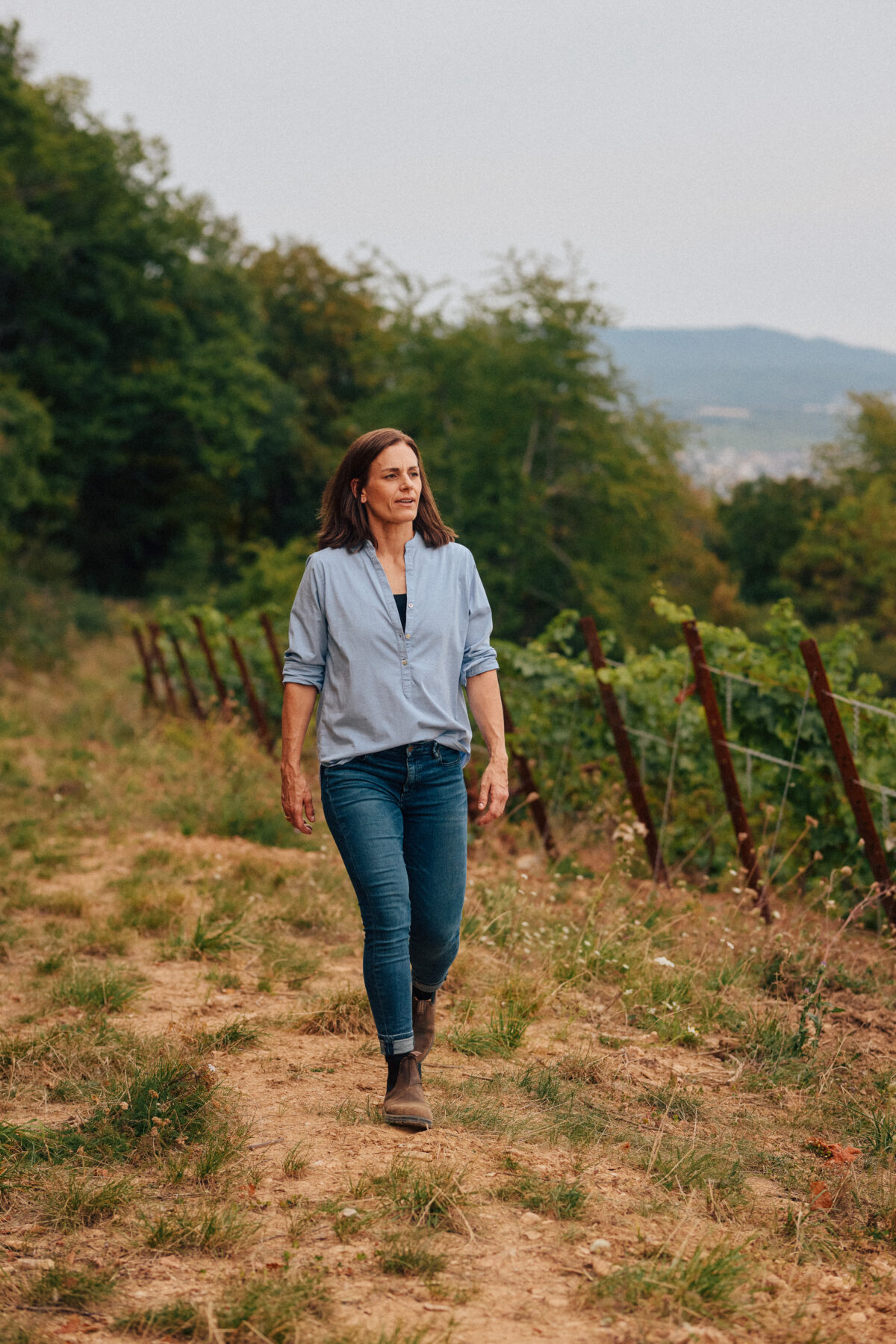
Haus Rothenberg’s vineyards lie predominantly in Langenlonsheim, with smaller parcels in Rummelsheim. Like the majority of the Nahe, this is not dramatic landscape of steep slopes; instead, open valleys, gentle hills, and a sense of wide space define the terrain. The key sites include Rothenberg (classified Grosse Lage), Lohrer Berg, and Hipperich.
The soils are complex and varied: shell limestone, gravel, and red sandstone in the subsoil, with clay and loess topsoils above. This layering gives wines from the region a distinctive balance. The permeable subsoils provide good drainage and encourage deep rooting; the topsoils retain water and nutrients. Combined with good air circulation and moderate temperatures, the resulting wines achieve ripeness without heaviness, precision without austerity.
Vineyard exposures are predominantly south to southwest. Vine age ranges from 30 to 40+ years for many parcels, planted during the 1980s and 1990s. The combination of mature vines, complex soils, and favorable mesoclimate produces wines with clarity, freshness, and inner tension year after year.
Viticulture
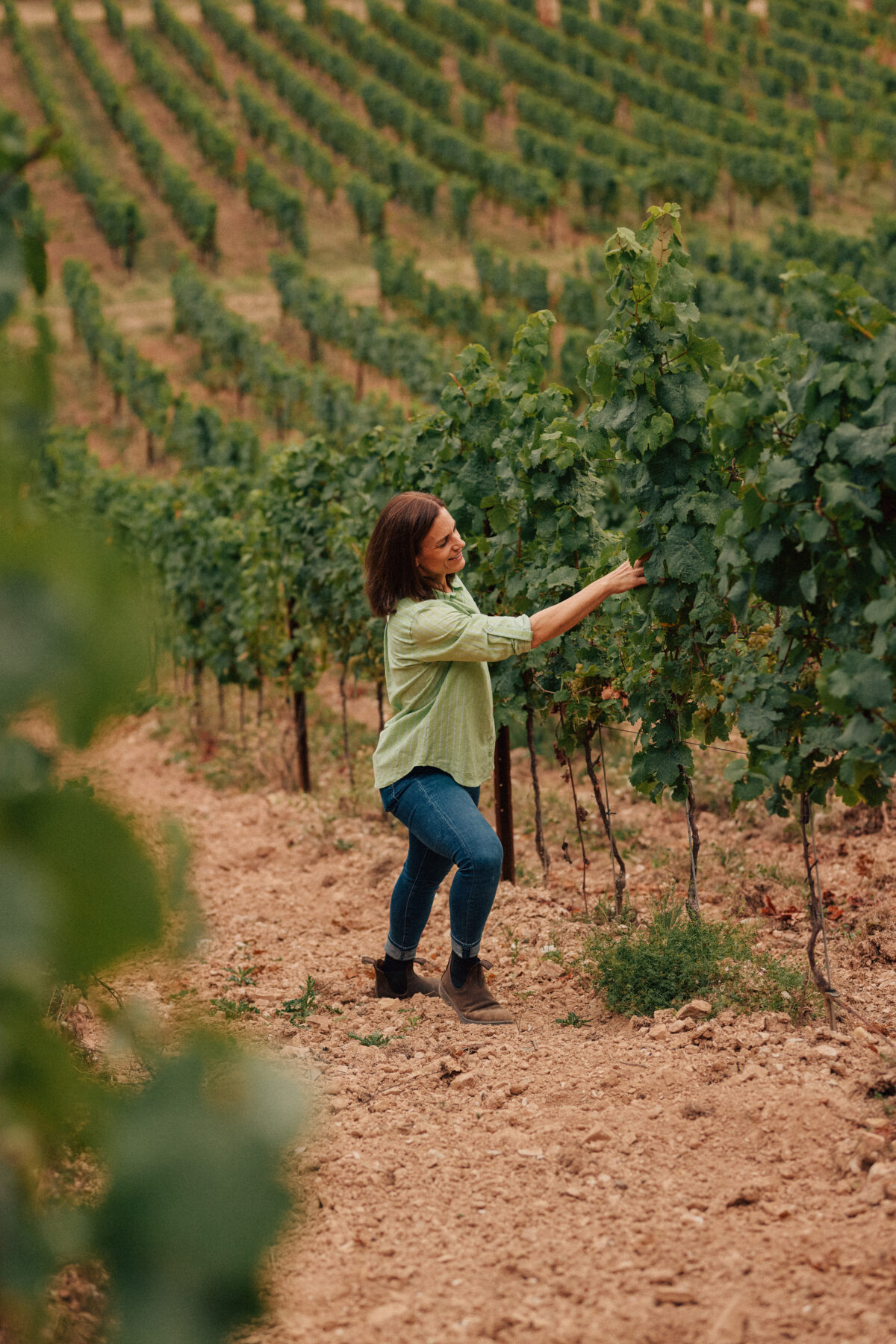
All Haus Rothenberg vineyards are farmed organically and sustainably, and are currently in transition to certification. Cover crops are used consistently to support soil structure, biodiversity, and water management. Training is vertical shoot positioning, with selective leaf removal, thinning, and yield regulation adapted to each vintage and site.
Grape varieties include Riesling, Pinot Gris, Pinot Blanc, Pinot Noir, Sauvignon Blanc, and Chardonnay, depending on site. Clones and massal selection are used according to the vineyard’s history. Climate adaptations include adjusted harvest timing, shading, and increased organic matter in the soil to preserve freshness while maintaining ripeness. Julia says, “The goal is not routine or volume, but balance and expression.”
Cellar
The cellar philosophy centers on clarity, precision, and drinkability. The Rieslings (feinherb and trocken) ferment with inoculated yeasts and age entirely in stainless steel from October through February or March. The Chardonnay ferments spontaneously and spends approximately nine months in large traditional oak casks (Stückfass) that are neutral and well-seasoned and chosen to support structure and texture without adding overt wood character. The Rothenberg Riesling ferments spontaneously in stainless steel, with extended aging from October through July.
Malolactic fermentation is managed according to style, often partially or completely prevented. Skin contact is minimal and targeted; fining and filtration are light. Sulfur additions are minimal and used only for stabilization. All wines receive several months on fine lees, with bottling timed to when balance and stability are achieved, followed by a short resting phase before release.